Identifying Appropriate Patients
Targeted care can change the treatment outcome for patients with Thyroid Eye Disease (TED).
Are you sure you want to leave?
Targeted care can change the treatment outcome for patients with Thyroid Eye Disease (TED).
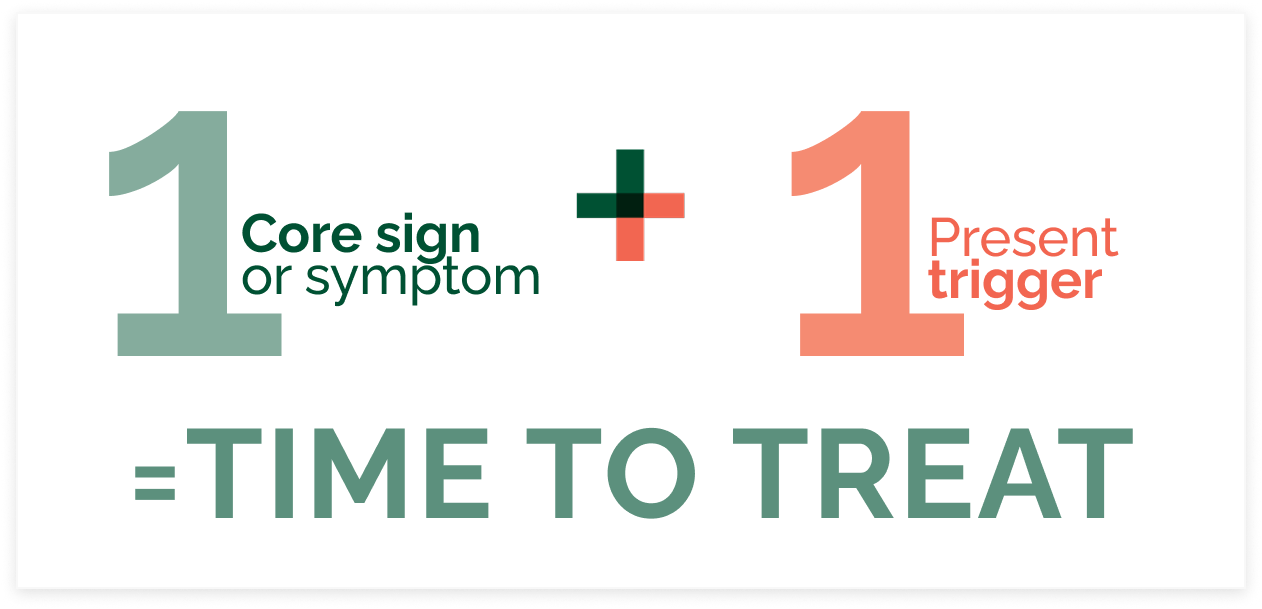
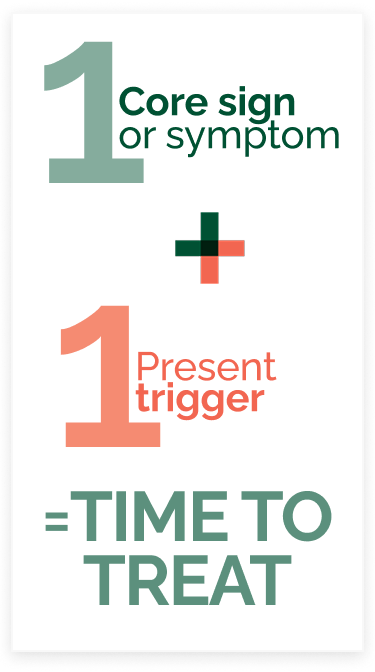
After TED is diagnosed, use this 1+1 checklist to determine when signs/symptoms and triggers call for treatment.
Eye bulging in one or both eyes
Protruding eyeballs
Inability to close eyes
Double vision
May close one eye while reading or driving
Eyes don’t move together/vertically misaligned
Persistent ache around the eye socket or brow area
Pain or pressure behind the eyes
Pain that worsens with eye movement
Difficulty reading or driving
Impact on self-confidence
Social withdrawal or appearance concerns
Impact on work, hobbies, or relationships
Redness, swelling, or irritation
Patient reports eyes feel “puffy” or “inflamed”
Swelling of caruncle or plica
Swelling of conjunctiva
New or progressing symptoms
Change in pain level
Change in proptosis, diplopia, or orbital pain
Changes observed in recent photos
Don’t wait for TED to progress. After all, TED doesn’t follow just one path—some patients progress slowly while others flare unpredictably. When you see at least 1 sign of TED + 1 trigger, act to help moderate to severe patients like these.
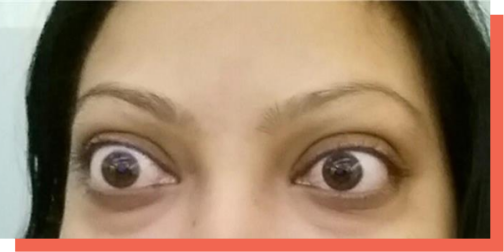
Clinical History
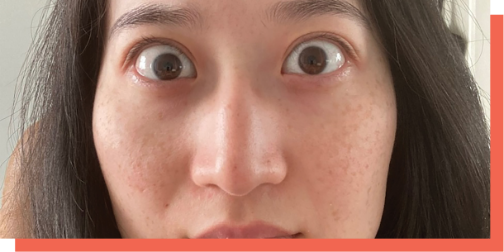
Age: 45 years old
Endocrine-related conditions: Graves’ disease, postprocedural hypothyroidism, type 2 diabetes
Time since TED diagnosis: ~4 years
Treatment history: Radioactive iodine, orbital decompression surgery, levothyroxine, diabetes medication
Signs & Symptoms
Proptosis
Dryness
Eye pain
Present Triggers
Decreased participation in activities
Worsening eye symptoms, including inflammation
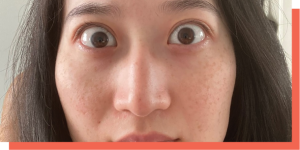
Jas, real TEPEZZA patient (compensated for her time)
Managed hypothyroidism post-radioactive iodine treatment. Noted persistent eye symptoms and referred to an endocrinologist

Confirmed history of Graves’ disease and hypothyroidism. Diagnosed TED and initiated TEPEZZA after symptoms worsened
Clinical History
Age/Gender: 24-year-old female
Endocrine-related conditions: Graves’ disease, hyperthyroidism
Time since TED diagnosis: 1 year
Treatment history: Eye drops, compresses
Signs & Symptoms
Proptosis (22 mm OU)
Orbital pain
Dryness and itchiness
Present Triggers
Decreased participation in hobbies
Inflammation
Recent worsening of eye symptoms
OU, oculus uterque (both eyes).
“The symptoms didn’t feel mild to me. My eyes would get really swollen. I’d have to ice them instead of going out, being active, and doing things I enjoy.”
– Lily, real TEPEZZA patient (compensated for her time)

Suspected hyperthyroidism and referred to endocrinologist
Diagnosed Lily with Graves’ disease, hyperthyroidism, and TED; referred for care

Introduced Lily to TEPEZZA
Patients with TED face an average 5-year diagnostic journey, which can lead to delayed care and continued impact on your patients’ daily lives5. To ensure your patients are on the right care pathway, locate a TED Specialist.
Help your appropriate patient initiate TEPEZZA treatment with the Patient Enrollment Form.
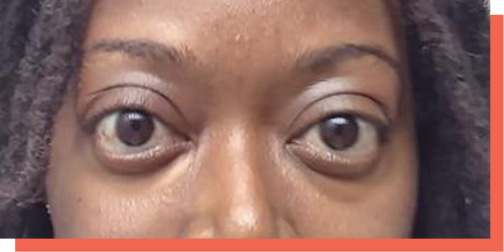
Clinical History
Age/Gender: 38-year-old female
Endocrine-related conditions: Graves’ disease
Time since TED diagnosis: 4 years
Treatment history: Steroids
Signs & Symptoms
Proptosis
Constant diplopia
Orbital pain
Present Triggers
Impact on activities of daily living (driving at night; difficulty reading)
Inflammation
Worsening of eye symptoms over time
“I would experience a lot of double vision, and that became more pronounced as the bulging become more pronounced as well.”
– Paris, real TEPEZZA patient (compensated for her time)

Diagnosed with Graves’ disease; referred to an endocrinologist
Treated symptoms of Graves’ disease; referred to an optometrist after eye symptoms emerged
Suspected a thyroid-related eye condition; sent to an ophthalmologist as symptoms progressed

Confirmed diagnosis of TED and introduced Paris to TEPEZZA
WARNINGS AND PRECAUTIONS
Infusion Reactions: TEPEZZA may cause infusion reactions. Infusion reactions have been reported in approximately 4% of patients treated with TEPEZZA. Reported infusion reactions have usually been mild or moderate in severity. Signs and symptoms may include transient increases in blood pressure, feeling hot, tachycardia, dyspnea, headache, and muscular pain. Infusion reactions may occur during an infusion or within 1.5 hours after an infusion. In patients who experience an infusion reaction, consideration should be given to premedicating with an antihistamine, antipyretic, or corticosteroid and/or administering all subsequent infusions at a slower infusion rate.
Inflammatory Bowel Disease: TEPEZZA may cause an exacerbation of inflammatory bowel disease (IBD). IBD has been reported in some patients without a prior diagnosis of IBD. Monitor patients for signs and symptoms of IBD. If IBD exacerbation is suspected, discontinue use of TEPEZZA.
Hyperglycemia: Increased blood glucose or hyperglycemia may occur in patients treated with TEPEZZA. In clinical trials, 10% of patients (two-thirds of whom had preexisting diabetes or impaired glucose tolerance) experienced hyperglycemia. Hyperglycemic events should be controlled with medications for glycemic control, if necessary. Assess patients for elevated blood glucose and symptoms of hyperglycemia prior to infusion and continue to monitor while on treatment with TEPEZZA. Ensure patients with hyperglycemia or preexisting diabetes are under appropriate glycemic control before and while receiving TEPEZZA.
Hearing Impairment Including Hearing Loss: TEPEZZA may cause severe hearing impairment including hearing loss, which in some cases may be permanent. Assess patients’ hearing before, during, and after treatment with TEPEZZA and consider the benefit-risk of treatment with patients.
ADVERSE REACTIONS
The most common adverse reactions (incidence ≥5% and greater than placebo) are muscle spasm, nausea, alopecia, diarrhea, fatigue, hyperglycemia, hearing impairment, dysgeusia, headache, dry skin, ear discomfort, weight decreased, nail disorders, and menstrual disorders.
INDICATION
TEPEZZA is indicated for the treatment of Thyroid Eye Disease regardless of Thyroid Eye Disease activity or duration.
Please see Full Prescribing Information for more information.
1. Barrio-Barrio J, Sabater AL, Bonet-Farriol E, et al. Graves’ ophthalmopathy: VISA versus EUGOGO classification, assessment, and management. J Ophthalmol. 2015;2015:249125. 2. Bothun ED, Scheurer RA, Harrison AR, Lee MS. Update on thyroid eye disease and management. Clin Ophthalmol. 2009;3:543-551. 3. Smith TJ, Cockerham K, Conrad E, Holt RJ. (2023, May 4-6). Assessment of the thyroid eye disease specific Graves’ ophthalmopathy quality of life questionnaire in noninflammatory or inactive thyroid eye disease patients. American Association of Clinical Endocrinology meeting. Seattle, WA. 4. National Organization for Rare Diseases. Thyroid Eye Disease. Rarediseases.org/rare-diseases/thyroid-eye-disease. Accessed February 15, 2026. 5. Data on File. Amgen. April 2020.